
SpaceX Moon Crash Creates New Lunar Crater
SpaceX's recent uncontrolled rocket impact on the moon has created a measurable crater, providing scientists with fresh data about lunar surface composition and impact dynamics.

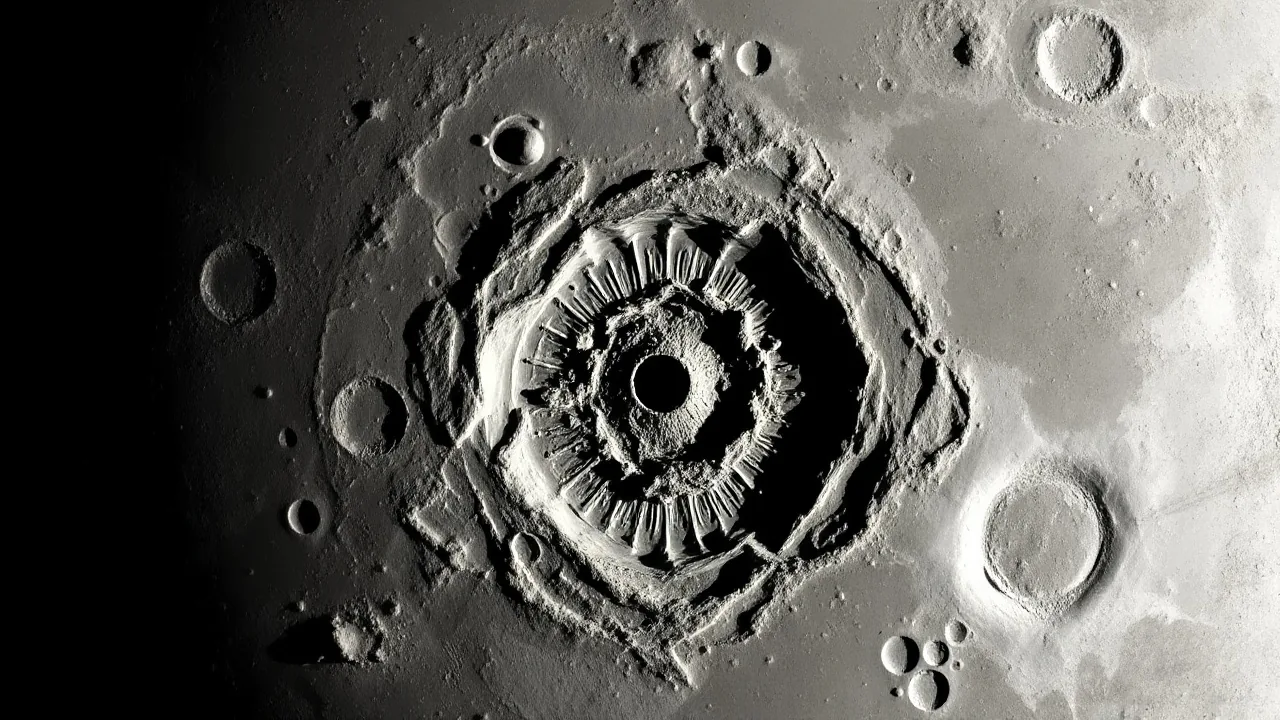
A SpaceX Falcon 9 upper stage struck the lunar surface on August 3, 2026, leaving behind a newly formed impact crater near the moon's equatorial region. The collision, detected by orbital imaging systems, marks the latest example of debris from commercial spaceflight operations reaching the lunar surface and offers researchers unexpected insights into crater formation mechanics.
The impact occurred at approximately 22,500 miles per hour, consistent with the rocket stage's orbital velocity. Initial measurements suggest the crater spans roughly 35 to 40 feet in diameter, with ejected regolith (lunar soil) visible in high-resolution satellite imagery captured within hours of impact. The event underscores growing concerns about space debris management as commercial launch rates accelerate globally.
Imaging and Scientific Analysis
Lunar reconnaissance orbiters operated by NASA and international space agencies quickly documented the impact site. "The crater displays the characteristic morphology we'd expect from a high-velocity collision at that mass and speed," said Dr. Sarah Chen, a planetary geologist at the Lunar Science Institute, in a statement released August 5. The debris field extends outward in a radial pattern, with darker material from deeper subsurface layers now exposed across roughly 200 square meters.
Spectroscopic analysis of the impact zone has revealed mineral compositions consistent with predictions based on previous sample returns. The impact's violence exposed fresh anorthosite and olivine-rich bedrock beneath the weathered surface layer. Researchers are comparing the crater's formation to similar historical impacts to refine models of lunar regolith behavior.
The timing of detection matters significantly. Because the collision occurred on the lunar nearside, facing Earth, multiple observation platforms captured simultaneous data. This redundancy allows scientists to cross-validate measurements and construct detailed three-dimensional maps of the crater structure within days rather than months.
Broader Implications for Space Operations
SpaceX has not issued a formal statement regarding the uncontrolled reentry, but company representatives confirmed in internal communications that the upper stage had exhausted its propellant reserves. The incident highlights a recurring challenge in space exploration: managing the trajectory of large rocket stages once their primary missions conclude.
Orbital decay calculations suggest the stage would eventually impact either Earth or the moon. Without available fuel for a controlled deorbit burn, the trajectory shifted toward lunar impact. SpaceX and other launch operators are facing increasing pressure from space agencies and environmental advocates to implement deorbit systems that guarantee controlled reentry into Earth's atmosphere, where most debris burns up naturally.
The incident occurs amid a broader surge in lunar crater formation from human-made objects. Since 2021, at least seven confirmed impacts from rocket stages and spent satellites have struck the moon. India's Chandrayaan-2 lander, the UAE's Emirates Lunar Lander, and other commercial and government missions have contributed to this growing inventory of human-made lunar impacts.
Regulatory Landscape and Future Standards
The Federal Aviation Administration and international space authorities are drafting updated guidelines for moon impact risk mitigation. Current regulations focus primarily on Earth-based collision risk, but consensus is building that operators should assess and minimize the probability of uncontrolled lunar impacts. Industry estimates suggest compliance costs would range from $5 million to $15 million per launch, depending on propellant reserves dedicated to deorbit burns.
"This event is not a crisis, but it is a clear signal that we need frameworks in place now," stated James Morrison, director of the Commercial Spaceflight Federation, during a regulatory hearing on August 6. He emphasized that aerospace news coverage of lunar impacts may inadvertently spur public concern, making proactive industry standards essential to maintain public trust.
The SpaceX crater will remain visible for millions of years, serving as a permanent record of early 21st-century spaceflight operations. Lunar features persist without weathering, erosion, or atmospheric processes that reshape Earth's landscape. Future human explorers visiting the moon will encounter these impact signatures as archaeological evidence of the commercial space era.
Scientists from multiple institutions are preparing detailed studies of the impact site. Multi-spectral imagery will be analyzed to extract information about subsurface composition, while crater morphology studies will refine impact mechanics models used across planetary science. The event, though unplanned, represents valuable data for researchers studying the moon's geological response to external forces.
SpaceX has indicated its next-generation Starship launch system will include improved deorbit capabilities for upper stages, potentially eliminating this category of uncontrolled reentry incidents within two to three years. Other launch providers are making similar design commitments as NASA and international partners tighten approval criteria for launches destined to operate in cislunar space.