
SpaceX Rocket Chunk Hits Moon, Creates New Lunar Crater
A 4-tonne piece of SpaceX rocket debris, the size of a school bus, has crashed into the moon, forming a new crater. The impact occurred near the Einstein Crater on Wednesday.

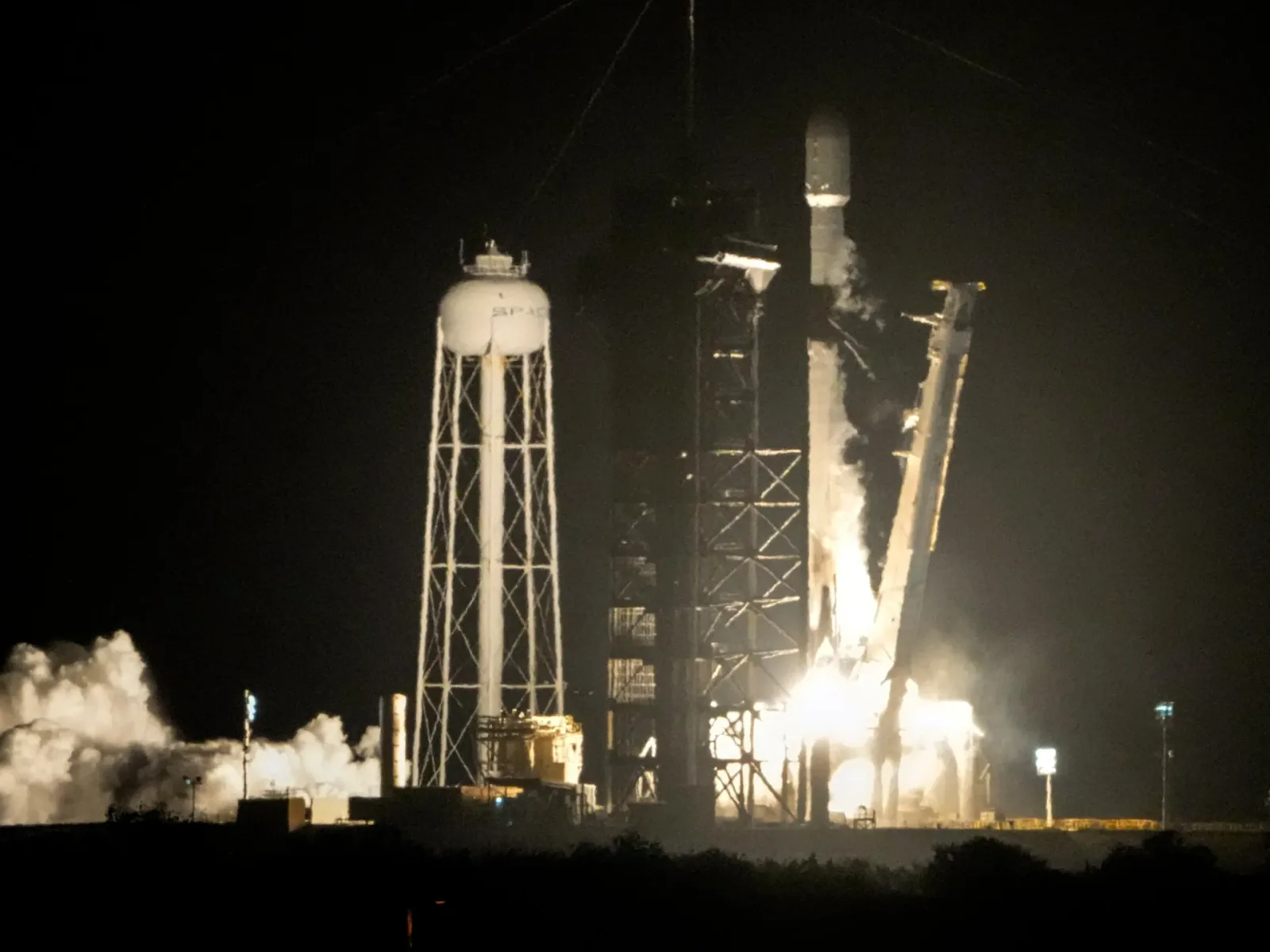
A massive piece of space debris, identified as the second stage of a SpaceX Falcon 9 rocket, crashed into the moon on Wednesday, leaving behind a newly formed crater. The object, weighing approximately four tonnes and roughly the size of a school bus, collided with the lunar surface near the Einstein Crater at an estimated speed of 8,700 kilometers per hour (5,400 miles per hour). The impact released energy equivalent to the detonation of three tonnes of TNT, according to data from independent astronomers and confirmed by space-tracking agencies. This marks the second time discarded rocket hardware has unintentionally struck the moon.
Typically, spent rocket stages either burn up upon re-entry into Earth's atmosphere or splash down in designated ocean zones after fulfilling their payload delivery missions. However, this particular SpaceX rocket stage, launched in early 2025, embarked on an unintended trajectory over an 18-month period. A combination of gravitational forces from the sun, Earth, and moon gradually altered its path, ultimately setting it on a collision course with the moon.
SpaceX acknowledged the trajectory was unintentional but deemed it unavoidable given the rocket's limited remaining fuel reserves. "What has happened is essentially a mixture of solar activity and gravity forces have put it on a path toward the moon," stated Julianna Scheiman, SpaceX's director of NASA science and Dragon programs, during a press briefing on Monday. She emphasized that such orbital mechanics are complex and can lead to unexpected outcomes with spent hardware.
Assessing the Lunar Impact and Space Debris Concerns
Orbital observation platforms, including NASA's Lunar Reconnaissance Orbiter (LRO) and South Korea's Danuri spacecraft, have reportedly adjusted their sensor configurations to document the aftermath of the collision. While the initial flash of impact occurred during daylight on the lunar surface and would not have been directly visible from orbit, these spacecraft are expected to provide high-resolution before-and-after imagery of the impact site. Scientists will analyze the ejected dust plume and the characteristics of the newly formed crater to gain insights into the physics of high-velocity cosmic impacts.
Space tracking expert Bill Gray, speaking to The Associated Press, commented on the incident, noting, "It doesn’t present any immediate danger, though it does highlight a certain carelessness about how leftover space hardware is disposed of." He further observed that "things are getting crowded up there," referencing the increasing volume of human-made objects in Earth's orbit and beyond. This incident underscores a growing concern within the space community regarding the long-term management and disposal of space debris.
The prior accidental lunar impact occurred on March 4, 2022. It involved a piece of a Chinese Long March 3C rocket, launched in 2014. That debris created an unusual double crater on the far side of the moon, drawing significant scientific attention. The latest SpaceX incident, while similar in its unintentional nature, underscores the ongoing challenges of managing spent rocket bodies in increasingly congested orbital environments.