
Elon Musk Net Worth: How SpaceX and Tesla Built a Fortune
Elon Musk's wealth has grown to an estimated $250 billion in 2026, driven primarily by his stakes in Tesla and SpaceX. His fortunes fluctuate with stock markets and aerospace contracts, reshaping his rank among global billionaires.

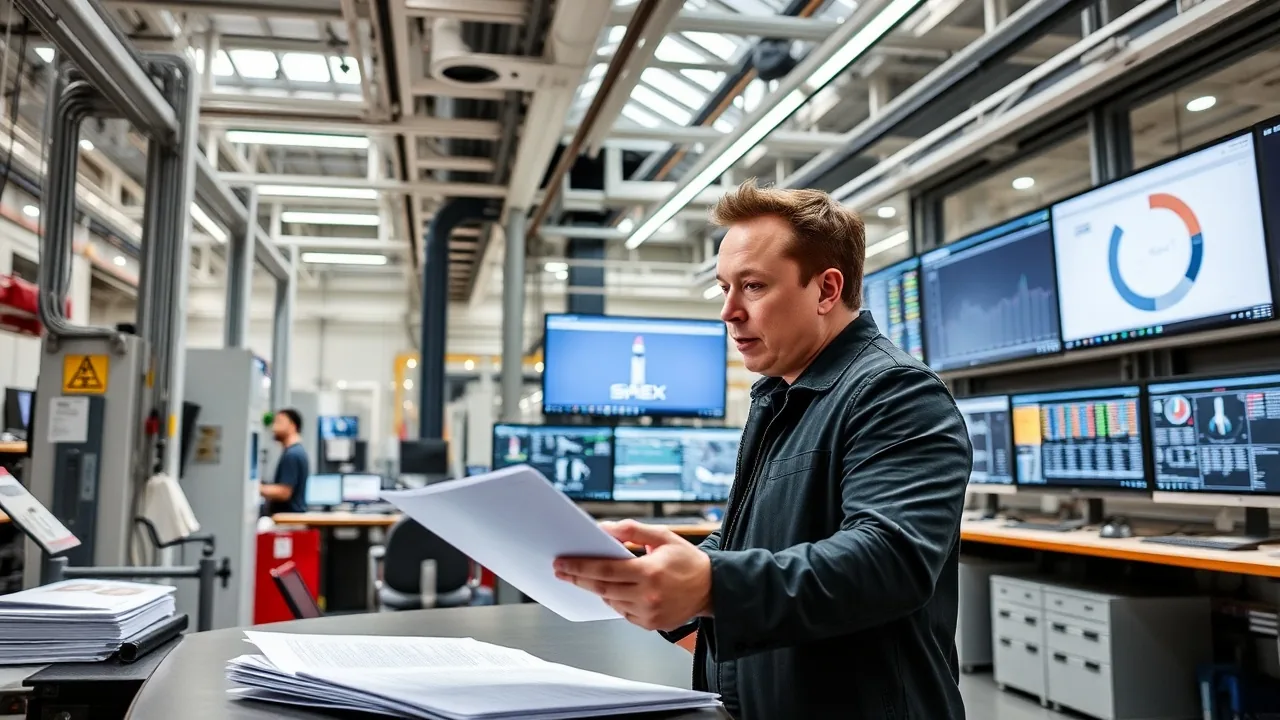
Elon Musk's net worth stood at approximately $250 billion as of June 2026, making him one of the wealthiest individuals on Earth. The figure represents a staggering concentration of wealth in two core assets: Tesla Inc., the electric vehicle and energy manufacturer, and SpaceX, the private aerospace contractor pursuing Mars colonization and orbital logistics. Understanding how these enterprises generate his fortune requires examining the ownership stakes, valuations, and market forces that underpin his position.
Tesla alone accounts for roughly 60 percent of Musk's documented wealth. His original 9.2 percent stake in the automaker, combined with additional share acquisitions and his role as CEO, ties his financial trajectory directly to Tesla's stock performance. At current valuations exceeding $800 billion, even modest percentage ownership translates to tens of billions in personal equity. The company's expansion into battery production, solar installation, and energy storage has broadened its appeal to institutional investors and retail traders alike.
SpaceX contributes the second pillar of his wealth, though in a more opaque manner. The private company, valued at $180 billion in its most recent private funding round in 2025, does not trade on public exchanges. Musk's majority ownership stake, estimated at 42 percent, translates to roughly $75 billion in paper wealth. SpaceX's Starship program, military contracts with the U.S. Space Force, and its Starlink satellite internet service create multiple revenue streams that sustain valuations difficult to compare to traditional corporations.
The Market Volatility Factor
Musk's net worth fluctuates dramatically with stock market movements. On June 1, 2026, Tesla shares surged 3.8 percent following news that the company had secured a $12 billion contract for autonomous vehicle software from a major global automaker. That single day's movement added approximately $2 billion to Musk's personal net worth. Conversely, regulatory setbacks or production delays have erased $5 billion to $10 billion in valuation within hours.
According to venture capital analyst Michael Rogers at Equity Research Partners, "Musk's wealth is less a reflection of stable assets than of market sentiment about two growth narratives: electric vehicle adoption and commercial spaceflight. Each operates in highly competitive, capital-intensive sectors where momentum can shift rapidly."
This volatility explains why different sources report his net worth within ranges rather than exact figures. Bloomberg Billionaires Index, Forbes Real Time Net Worth, and other trackers update continuously, sometimes showing variations of $10 billion or more depending on market hours and data refresh timing. Tesla's inclusion in major stock indices means institutional rebalancing events can trigger substantial price movements independent of company fundamentals.
Beyond Tesla and SpaceX
While Tesla and SpaceX dominate Musk's billionaire status, other ventures contribute smaller but meaningful components to his portfolio:
- X (formerly Twitter): Musk acquired the social media platform for $44 billion in October 2022. His current stake, valued between $15 billion and $20 billion depending on internal valuation models, represents a significant but disputed asset. The company remains private and unprofitable under his ownership.
- Neuralink: The neural interface startup founded in 2016 has conducted initial human trials and targets applications in paralysis treatment. Musk owns approximately 54 percent of the company, valued conservatively at $5 billion by recent fundraising rounds.
- The Boring Company: Musk's tunnel-digging venture operates beneath Las Vegas and is exploring contracts for urban transit infrastructure. Estimates place its value at $920 million, though it remains a minor portfolio component.
These secondary holdings illustrate Musk's investment philosophy: acquiring or founding companies in sectors he identifies as foundational to human civilization, whether aerospace, energy, transportation, or neurotechnology. None approach the scale of his core positions, but collectively they reinforce his diversification across innovation-driven industries.
Musk's personal liquidity differs sharply from his net worth. During Twitter's acquisition, he sold approximately $15 billion in Tesla shares to fund the deal, demonstrating that paper wealth requires liquidation to access cash. In 2024 and 2025, he liquidated modest Tesla positions to cover Neuralink clinical trial expansion and SpaceX facility upgrades, raising roughly $8 billion annually. His actual spending on personal consumption remains modest relative to his means; documented personal assets include a small real estate portfolio and aircraft, totaling less than $1 billion.
The Entrepreneur Effect on Valuation
Musk's personal brand significantly influences investor valuations of his companies. Tesla's premium valuation, roughly 8 to 10 times higher than traditional automakers on revenue-per-dollar metrics, partly reflects investor confidence in Musk's execution ability and vision. Similarly, SpaceX's private valuation exceeds what comparable aerospace contractors command, partly due to his stated ambition to land humans on Mars and establish permanent lunar bases by the 2030s.
This dynamic cuts both directions. Operational setbacks, regulatory investigations, or public controversies can depress valuations. In early 2024, federal investigations into Tesla's autonomous driving claims temporarily reduced shareholder confidence, trimming Musk's net worth by $8 billion in a single month. Conversely, successful Starship orbital refueling tests in March 2026 triggered a SpaceX valuation increase that, while private, was reflected in secondary market transactions that suggested a $15 billion jump in the company's implied worth.
Tax implications further complicate the wealth picture. Musk's primary tax exposure stems from Tesla shareholding. Unrealized gains on appreciated shares generate no tax liability until sold, but voting power remains tied to ownership. Proposals to tax billionaires on unrealized capital gains, while not law as of June 2026, continue to appear in legislative discussions. SpaceX presents a different calculus: private company dividends or distributions face corporate tax and personal income tax, creating effective rates exceeding 50 percent in high-income scenarios.
Looking forward, Musk's net worth will remain tethered to Tesla's production ramp in India and Mexico, SpaceX's success in winning defense and commercial satellite contracts, and the viability of autonomous vehicle software as a recurring revenue stream. His wealth concentration in two companies, while substantial, also exposes him to sector-wide disruption if competing technologies or competitors gain market share. For investors and analysts tracking billionaire wealth, Musk remains the clearest case study in how rapid innovation and founder-controlled voting shares can generate unprecedented personal fortunes in the 21st century.