
Perseids Meteor Shower Peaks Aug. 12 Alongside Solar Eclipse
The Perseids meteor shower, often called the year's best, will peak on the evening of August 12 into the early morning of August 13. Stargazers can also witness a solar eclipse.

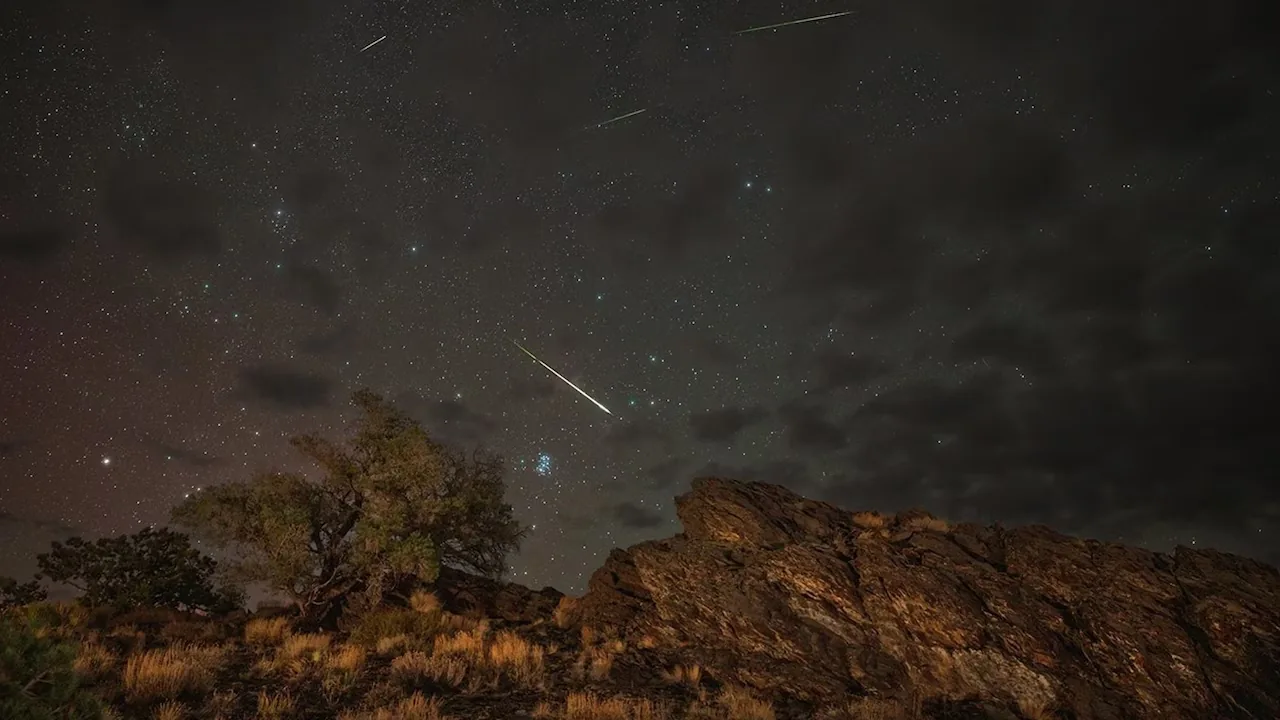
Stargazers in the United States are in for a celestial treat as the annual Perseids meteor shower reaches its peak on the evening of August 12, extending into the early morning hours of August 13. Coinciding with a solar eclipse that will be visible across parts of the country, from Alaska to North Carolina, this event promises a spectacular display of natural phenomena. The Perseids meteor shower occurs annually when Earth traverses the trail of debris left by Comet Swift-Tuttle, a celestial body that completes an orbit around the sun every 133 years.
"As those tiny bits of comet dust hit our atmosphere at high speed, they burn up as bright streaks of light," explained NASA on its website. Observers aiming for the best experience should plan to stay out late, find a location with minimal light pollution, and allow their eyes at least 30 minutes to adapt to the darkness. The space agency highlights that the Perseids are renowned for producing long, luminous trails, often referred to as "wakes" of light and color, solidifying their reputation as the premier meteor shower of the year.
Understanding the Perseids Phenomenon
The dazzling streaks of light are a direct result of the intense friction generated as small particles, some no larger than a grain of sand, enter Earth's atmosphere at speeds up to 133,000 miles per hour. The comet responsible, Swift-Tuttle, has a long orbital period, meaning its debris field is spread across a vast portion of its path around the sun. While the comet itself is not visible during the shower, its lingering dust and ice fragments create the annual spectacle. This year's viewing conditions are particularly noteworthy due to the confluence with a solar eclipse, which could offer a unique backdrop, though the meteor shower is best viewed away from any direct light.
For optimal viewing of the Perseids meteor shower, experts advise locating an open area free from obstructions like trees and buildings. Urban areas with significant light pollution will diminish the number of visible meteors. The moon phase also plays a crucial role; a full moon can wash out fainter meteors, making a dark sky essential. However, the Perseids are known for their brightness, with many fireballs capable of cutting through moderate moonlight. The event is a significant one for amateur astronomers and casual skywatchers alike, offering a readily accessible cosmic event.
The peak viewing window is expected to be after midnight on August 12, when the radiant point of the shower, the constellation Perseus, is high in the sky. However, meteors may be visible for several nights before and after the peak. This annual display provides a consistent and reliable opportunity for the public to connect with astronomical events, highlighting the dynamic nature of our solar system. The combination with a solar eclipse adds an extra layer of excitement, though the eclipse's visibility and path will vary significantly across the U.S.
NASA scientists continue to study meteor showers to better understand the composition of comets and the early solar system. The study of these celestial events also contributes to space weather forecasting, as impacts from larger meteoroids can pose risks to satellites and spacecraft. The Perseids, specifically, have been observed and documented for centuries, with records dating back to ancient China, underscoring their enduring fascination for humanity. This year's shower offers a chance to witness a piece of cosmic history firsthand.