
SpaceX IPO Date: What Investors Should Know Now
SpaceX remains privately held in 2026 despite investor interest, but a potential public offering could reshape the aerospace sector. Here's what we know about timing and opportunities.

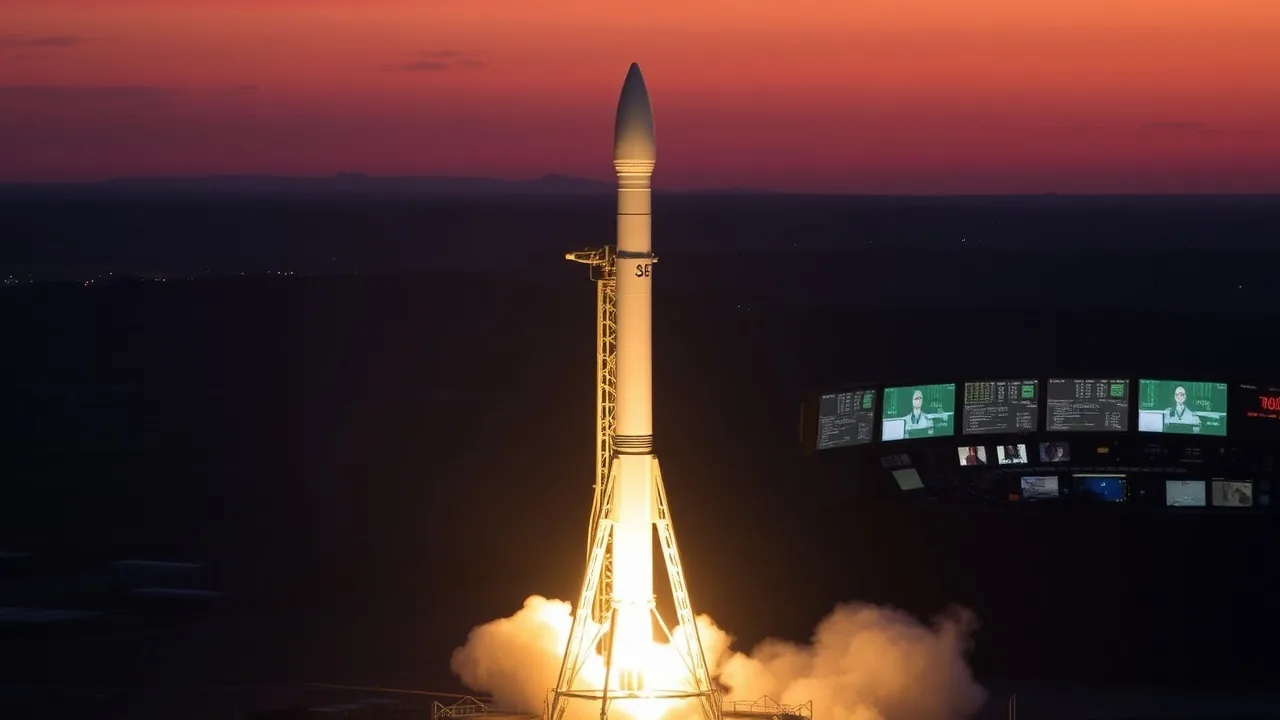
Elon Musk has not announced a confirmed IPO date for SpaceX as of June 2026, yet the prospect of taking the rocket company public continues to drive conversation among institutional investors and aerospace analysts. The company, valued at approximately $210 billion in its most recent funding round, represents one of the largest privately held firms in the United States.
SpaceX's business model centers on Falcon 9 launches, Starship development, and the Starlink satellite internet constellation. Revenue streams have grown substantially, with the company conducting dozens of orbital missions annually and expanding its commercial and government contracts. Despite this operational success, Musk has repeatedly stated that SpaceX will remain private "for as long as it makes sense."
"We've been very clear that an IPO is not imminent," a SpaceX spokesperson said in a statement earlier this year. "The company's capital needs can be met through private funding and operational cash flow." This messaging has remained consistent even as competitors like Axiom Space and emerging launch providers seek public market access.
Market Appetite and Investor Sentiment
Wall Street has shown persistent appetite for aerospace stocks that benefit from space sector growth. Companies like Relativity Space and Axiom have pursued public listings or merger-backed routes to the market. Several investment banks have published research outlining SpaceX's valuation potential at IPO, with estimates ranging from $250 billion to $400 billion depending on assumptions about Starlink's profitability and Starship commercial readiness.
Galaxy Digital's lead analyst on aerospace noted in May 2026 that "institutional demand for pure-play private spaceflight exposure remains very high. An IPO would likely be oversubscribed within hours." However, analyst sentiment also reflects uncertainty about the company's capital intensity and the timeline for profitability on mega-projects like Mars architecture.
Several mutual funds and ETFs focused on space have added SpaceX exposure through secondary market purchases of existing shares, signaling that some investors are already positioning for eventual liquidity events.
Regulatory Pathways and Strategic Timing
SpaceX operates under Federal Aviation Administration licensing and Department of Defense contracts, which could influence IPO timing and disclosure requirements. A public listing would trigger more rigorous scrutiny of military and national security contracts, as well as foreign ownership restrictions on certain technologies.
Musk's involvement with multiple high-profile companies—including Tesla, xAI, and others—complicates corporate governance at SpaceX and may factor into any future IPO decision. The SEC would require clear separation of executive roles and potential conflict-of-interest management.
The space industry itself is maturing. Government spending on commercial launch services and satellite communications has stabilized at roughly $12-14 billion annually. Starlink's expansion into direct-to-consumer broadband adds a new revenue stream but also subjects SpaceX to FCC regulation and international agreements on spectrum use.
Industry observers point to 2027 or 2028 as potential windows if SpaceX pursues a public offering. By then, the company expects to have demonstrated higher Starship flight rates and Starship-based commercial missions, which could justify a higher valuation and reduce perceived technical risk in the eyes of equity analysts.
What an IPO Would Mean for the Sector
A public SpaceX would likely catalyze further consolidation and investment across the private spaceflight landscape. Smaller launch providers, satellite operators, and space infrastructure companies would face pressure to demonstrate clear paths to profitability or risk being acquired or consolidated.
Public disclosure would also shed light on SpaceX's actual profitability across business units. Starlink has reported growth in subscribers and revenue, but the company has not published segment-level financial detail. An IPO prospectus would require detailed breakdowns of:
- Commercial launch revenue and margins
- Government contract revenue (NASA, DoD, Space Force)
- Starlink subscriber counts, churn, and ARPU (average revenue per user)
- Capital expenditures for Starship development and deployment
- International revenue exposure and regulatory risk
The Musk-led organization has historically operated with minimal public disclosure about financial performance. An IPO would end that era, potentially opening the door to quarterly earnings calls, institutional analyst coverage, and SEC filing scrutiny that some observers believe could constrain executive decision-making.
For retail investors interested in space sector exposure, an IPO would provide direct access to what is arguably the dominant player in commercial launch and satellite internet. Currently, exposure comes through secondary share purchases, SPACs, or holdings in broader aerospace and technology indices.
No confirmed date exists for a SpaceX IPO in 2026. The company's leadership has made clear that going public is not a near-term priority, and internal capital generation appears sufficient for near-term mission goals. However, the strategic and financial case for eventual public listing remains compelling—and investor patience, while currently stable, will likely tighten if competitors capture significant market share in launch or broadband services over the next 18 to 24 months.