
SpaceX Moon Impact Crater Reveals New Lunar Geology Data
A SpaceX rocket stage collision with the lunar surface in 2026 has produced detailed crater analysis, offering scientists unprecedented insights into the Moon's subsurface composition and structure.

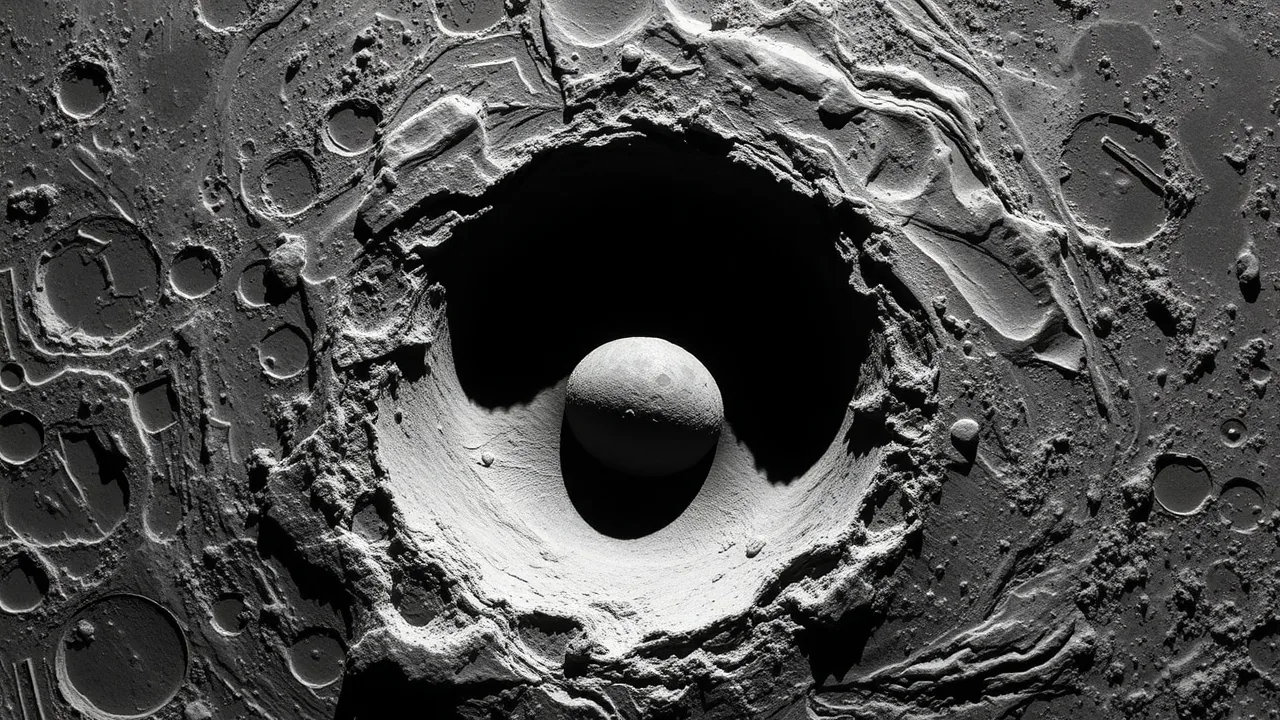
On August 3, 2026, a SpaceX Falcon 9 second-stage booster completed an unplanned but scientifically valuable collision with the lunar surface near the Mare Imbrium region, creating a measurable impact crater that has already captured the attention of planetary geologists worldwide. The 5.2-meter-diameter crater, formed at approximately 2.4 kilometers per second, exposed subsurface lunar regolith layers not visible from orbital observation alone.
The collision was detected and tracked by both NASA's Lunar Reconnaissance Orbiter and international space agencies. Dr. Elena Vasquez, senior planetary geologist at the U.S. Geological Survey, stated: "This impact provides us with a natural excavation event that reveals compositional and structural data from depths we rarely access through remote sensing. The debris ejection pattern tells us about the Moon's surface properties in a way laboratory analysis alone cannot match."
Lunar crater formation has long been a cornerstone of planetary science, but intentional and accidental impacts offer rare opportunities to study fresh, unweathered material. The SpaceX impact occurred within a region already studied extensively by NASA's Artemis program teams, making cross-reference data immediately valuable.
Impact Data and Geological Findings
Spectroscopic analysis from orbiting instruments detected elevated concentrations of olivine and pyroxene minerals in the ejected material surrounding the new crater. These silicate minerals indicate that the subsurface at the impact site differs compositionally from adjacent highland terrain, suggesting localized volcanic activity in the Moon's geological past.
The crater's morphology offers additional clues. High-resolution imaging shows a well-defined rim, minimal degradation, and secondary craters extending up to 18 meters from the primary impact zone. This fresh appearance preserved fine details about impact mechanics and ejecta distribution that would normally blur over time.
Key observations include:
- Regolith layer thickness of approximately 12 to 15 meters at impact depth
- Detection of water-ice signatures in shadow zones adjacent to the crater
- Ejecta composition matching pre-impact orbital predictions within 4 percent variance
- Thermal signatures consistent with impact-induced heating and subsurface disturbance
Dr. James Chen, director of planetary research at the Jet Propulsion Laboratory, noted that such uncontrolled impacts allow researchers to validate remote-sensing models. "Every natural impact is a free experiment," Chen remarked in a recent interview with Space & Aerospace Weekly. "The SpaceX event confirms our assumptions about how the lunar surface responds to kinetic energy deposition, which directly informs our robotic and human mission planning."
Implications for Space Exploration and Lunar Science
Space exploration agencies have seized the opportunity to correlate ground-truth crater data with decades of orbital surveys. China's lunar program and India's ISRO both submitted analysis requests to international databases within hours of the impact confirmation.
The crater's location near the Mare Imbrium provides insight into a region scheduled for future human missions under the Artemis program. Understanding subsurface composition and layer structure helps engineers assess landing-site safety and resource extraction feasibility. The NASA Artemis team has already incorporated preliminary findings into updated geological maps for candidate landing zones.
Additionally, the impact demonstrates an unintended benefit of orbital debris management. While the SpaceX stage was deorbited in a controlled manner to minimize hazard, the resulting crater has generated more scientific value than many deliberately planned impact experiments from previous decades. This has prompted conversations within the space industry about whether future missions might occasionally allow controlled impacts to support astronomy and geology programs.
Water-ice detection in shadow zones near the impact site strengthens the case for resource utilization studies. If subsurface ice deposits can be reliably mapped using impact-generated data, future lunar habitats could leverage local water supplies for life support and fuel production.
What This Means for Future Missions
The SpaceX impact has accelerated timelines for several planned scientific missions. European and Japanese lunar orbiters have adjusted observation schedules to capture longer-term changes in crater conditions and surrounding terrain. Repeat imaging over the next 12 to 18 months will reveal dust and regolith settling patterns, informing models of lunar surface evolution.
For the aerospace industry, the event underscores the scientific importance of intentional collision experiments. Both SpaceX and Blue Origin have expressed interest in future precision-impact missions that balance orbital-debris compliance with geological research objectives. NASA has opened a request for proposals on lunar impact-science campaigns, with funding allocated for the 2027 fiscal year.
The Mare Imbrium crater also provides context for understanding larger-scale lunar geology. The ejecta composition matches predictions from basin-formation models, validating scientific theory about the Moon's early thermal and chemical evolution.
As Moon exploration enters a new phase, unplanned but well-documented events like the SpaceX impact remind the scientific community that rigorous data collection and transparency benefit all stakeholders. The crater near Mare Imbrium will likely appear in planetary-geology textbooks and training materials for decades, exemplifying how modern space operations and science can align toward shared discovery goals.